
Skip to content
Dakreator38

Session 10 of 12

From Still Image to Moving Shot

A still captures a moment. A shot contains time. Direct the event: beginning state, change, ending state. Do not animate the image.

MasterclassMeaningful change, not animation

Covers

  • Chapter 11 — From Still Image to Moving Shot
Do not animate the image. Direct the moment.

Learning outcomes

  • Design motion as beginning state, change, and ending state
  • Name the one movement the audience must notice — everything else supports it
  • Decide what should remain still, including the camera

From the draft

Chapter 11
Movement does not make an image cinematic. Meaningful change does. A beautiful still image does not automatically become a good cinematic shot when motion is added. In fact, unnecessary motion can destroy what made the image powerful.
Chapter 11 · Three-stage motion
Imagine Nya Nyongo standing beside the lake. Beginning state: she watches with confidence. Change: she sees him step onto the water. Ending state: her certainty becomes disbelief. The important motion is not simply: Nya Nyongo moves. The important motion is: her understanding changes.
Chapter 11
When everything moves, the audience may not know where to look. Ask: What is the most important change in this shot? That answer should control the motion hierarchy.

Classroom plates

Traitor King / DaKreator38 stills

The class is drawn from Julius Nzang’s Volume 1: From Imagination to Cinema. Classroom stills are DaKreator38 production frames. This is not a book for sale on this site.

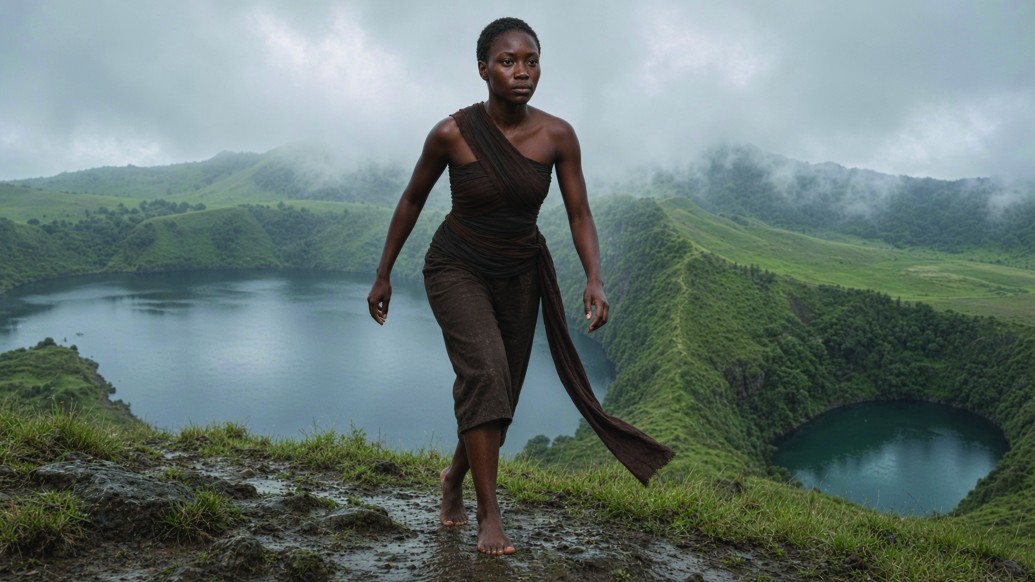
Nya Nyongo mid-stride on the ridge above the Twin Muanenguba Lakes

TK-BA-01

FIGURE 11.1 · STILL → MOTION

Same world as LOC/NYA-02 — now intention through the body (mid-stride). Meaningful change, not animation.

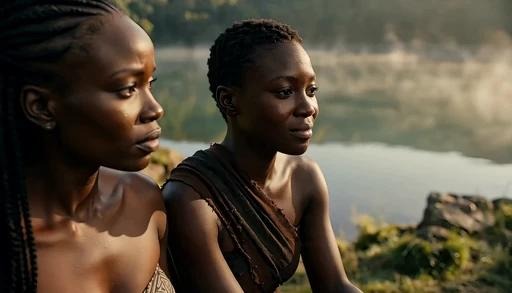
Nya watches — reaction

TK-SL-RXN

FIGURE 11.2 · REACTION PAIR

Peter look → Nya watch. The cut will later reconstruct the larger experience; the motion inside each shot must already have an ending state.

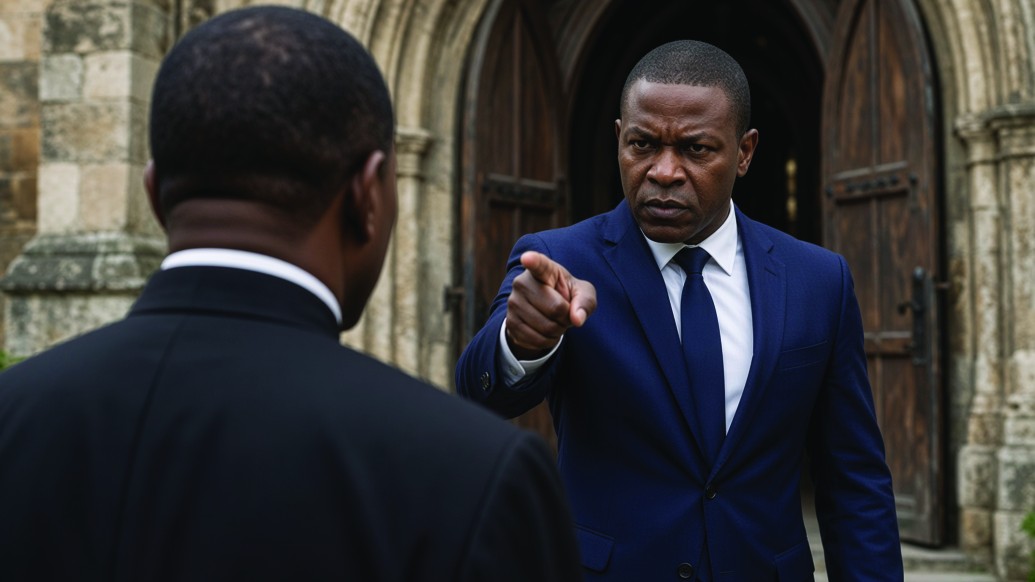
Over-the-shoulder: a government official points at Peter, seen from behind

TK-SL-OTS

FIGURE 11.3 · OTS — CONFRONTATION

Over-the-shoulder grammar. Coverage is a decision, not a default camera move.

The work

Classroom labs

Live lab

Still before motion

Choose one still from your film. Before any animation, answer the draft questions: What happened immediately before? What is happening now? What should happen next? What changes emotionally? What should move? What should remain still? Should the camera move? Why? Where should the shot end? Design the event. Do not simply animate the image.

Take-home

One moving shot, one primary action

Produce or fully specify one moving shot with a motion hierarchy: primary, secondary, environment, performance, camera. Bring the still and the directed motion notes. Session 11 will cut it.