
Skip to content
Dakreator38

Session 08 of 12

Directing AI Actors

A moving character is not necessarily an acting character. Performance begins when the audience senses a mind behind the movement.

MasterclassIntention, not motion

Covers

  • Chapter 09 — Directing AI Actors
Direct the emotion behind the action. The action is seen. The emotion is remembered.

Learning outcomes

  • Separate action from performance on one beat
  • Direct one line three ways: open emotion, restraint, contradiction
  • Name scene objective versus story objective for your lead

From the draft

Chapter 09
Peter sits. That is action. Peter sits slowly after realizing the accusation is true, keeping his eyes on the floor because he does not trust himself to respond yet. That is performance. The second description contains thought. The body becomes connected to the internal world of the character.
Chapter 09
Before directing emotion, identify what the character wants in the scene. Peter's larger objective may involve understanding why he has been brought back. In one scene, his immediate objective may simply be: get the injured captain to safety. In another: hide his true identity. In another: understand why Nya Nyongo recognizes him.
Chapter 09
Even when the body is still, the character may be listening, resisting, judging, remembering, hiding, waiting, testing, withholding. Direct that internal action. This creates performance without unnecessary physical movement.

Classroom plates

Traitor King / DaKreator38 stills

The class is drawn from Julius Nzang’s Volume 1: From Imagination to Cinema. Classroom stills are DaKreator38 production frames. This is not a book for sale on this site.

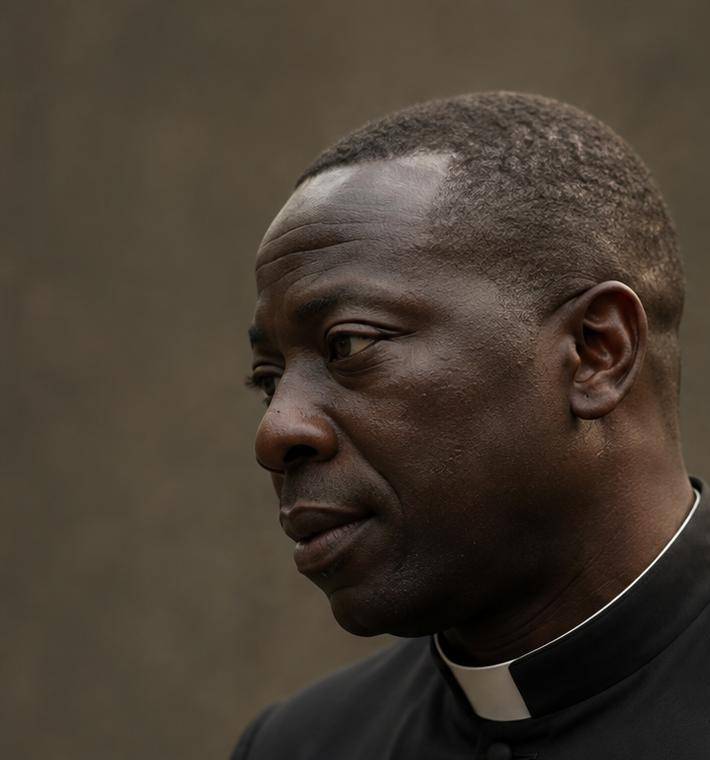
Peter realizes the truth

TK-PETER-04

FIGURE 9.1 · CASE — PETER REALIZES TRUTH

Sits slowly; eyes on the floor. The body does it this way because of what he now knows.

Nya Nyongo, stillness as authority

TK-NYA-01

FIGURE 9.2 · CASE — NYA AUTHORITY

Stillness as power. She does not need to move to be acting.

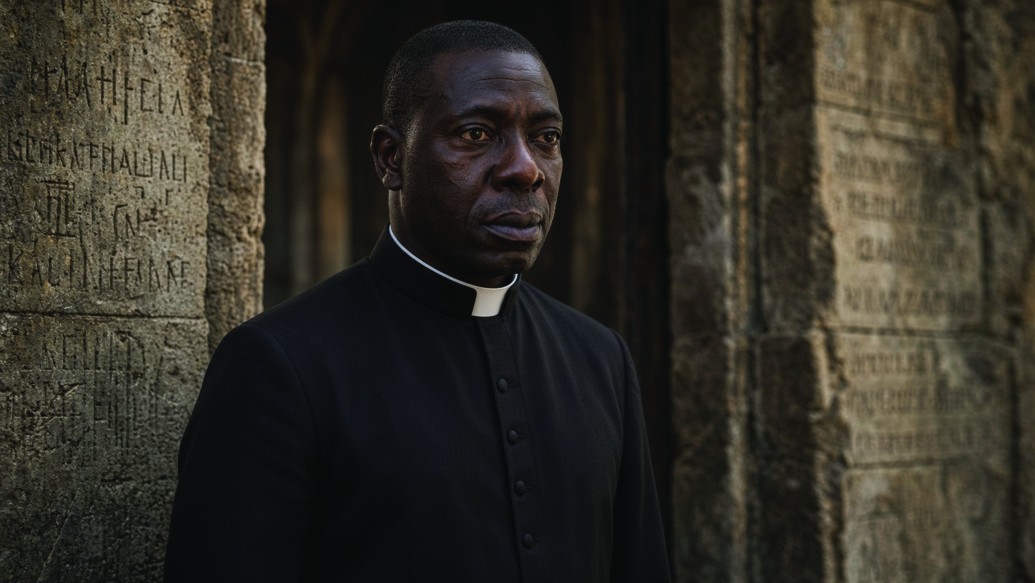
Peter in clerical collar at a carved stone doorway — the place that erased his name

TK-PETER-02

FIGURE 9.3 · CASE — THRESHOLD RETURN

Identity and place. Smaller objectives keep scenes active when the larger journey is return.

The work

Classroom labs

Live lab

One line, three directions

Take one emotional line from your film. Version one — open emotion: the character allows it to show fully. Version two — restraint: they try to hide it. Version three — contradiction: they say one thing while the body communicates another. Which version fits the character? That answer should come from identity, not spectacle.

Take-home

Objective and subtext

For one scene, write: story objective, scene objective, what they are trying not to show, one or two physical behaviors that reveal the truth, eye line, voice behavior, what is different by the end. Bring it to preproduction. You now have story, character, world, camera, prompting, and performance.