June 19, 2026 · 8 min
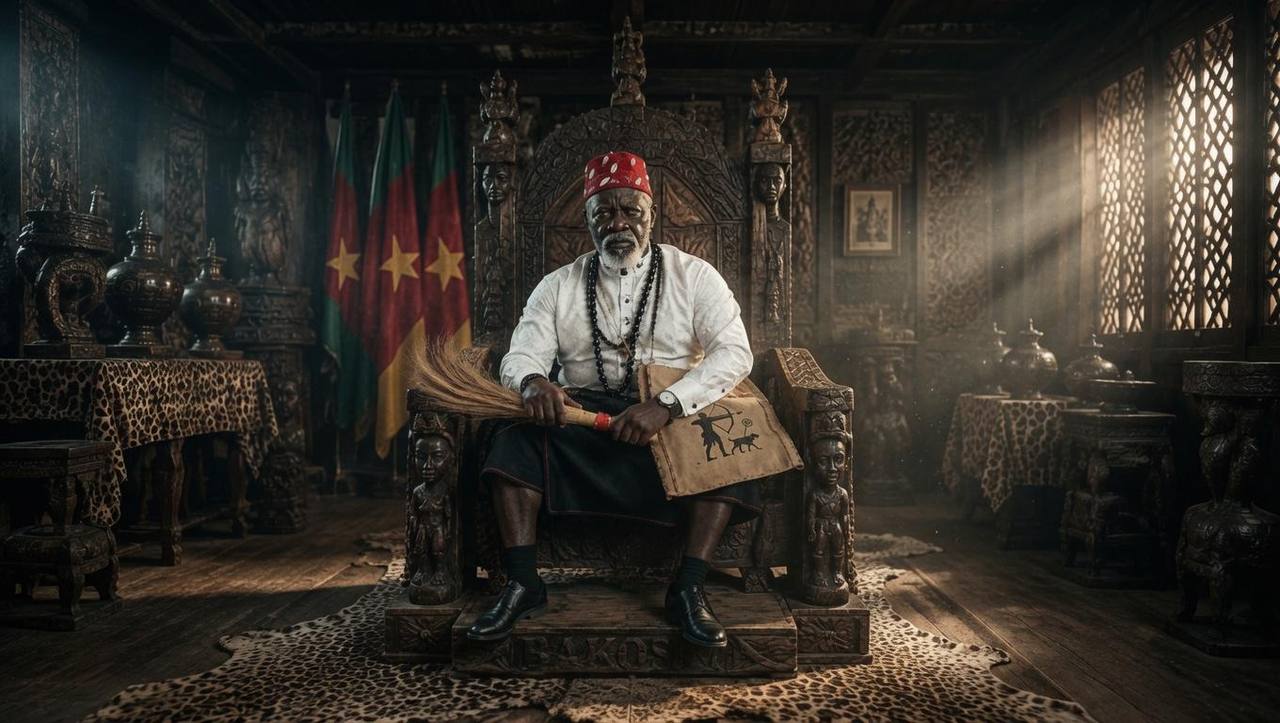
African royal cinema has often been asked to perform poverty or to perform a tourist's idea of gold. Kings and Queens Vol. 1: The Traitor King was written against both. The palace is wood and coral and smoke. Power is a stool, a lie, a set of names someone tried to erase.
Research, then myth
We started with Bakossi land — Mount Kupe, the Twin Muanenguba Lakes, one blue and female, one green and male — and then did the thing fiction is allowed to do: heighten. The king falls in the present. Twenty years earlier he banished his own son. Emade never forgot. Deep beyond the lakes, an ancient female guardian has watched generations of kings come and go. Her name is Nya-Nyongo.
None of that is a tool tutorial. That is a bible: the covenant between land, ancestors, and the living; who may sit; who must be forgotten; how mist sits on crater water. Only then did we generate. When a frame violated the bible, it was not 'a cool variation.' It was a continuity error.
Faces that return
The hardest technical problem in this kind of work is not beauty. It is return: the same Peter in a collar and in the forest of his childhood; the same Emade when the lie breaks; the same lakes at dawn and in storm. We treated that as a casting and makeup problem. The machine is the camera. The director still has to recognize his actors.
Some histories are forgotten. Others are deliberately buried.
Volume 1 is the door. The cycle is the house. We are building it as if it will be walked through for a decade.