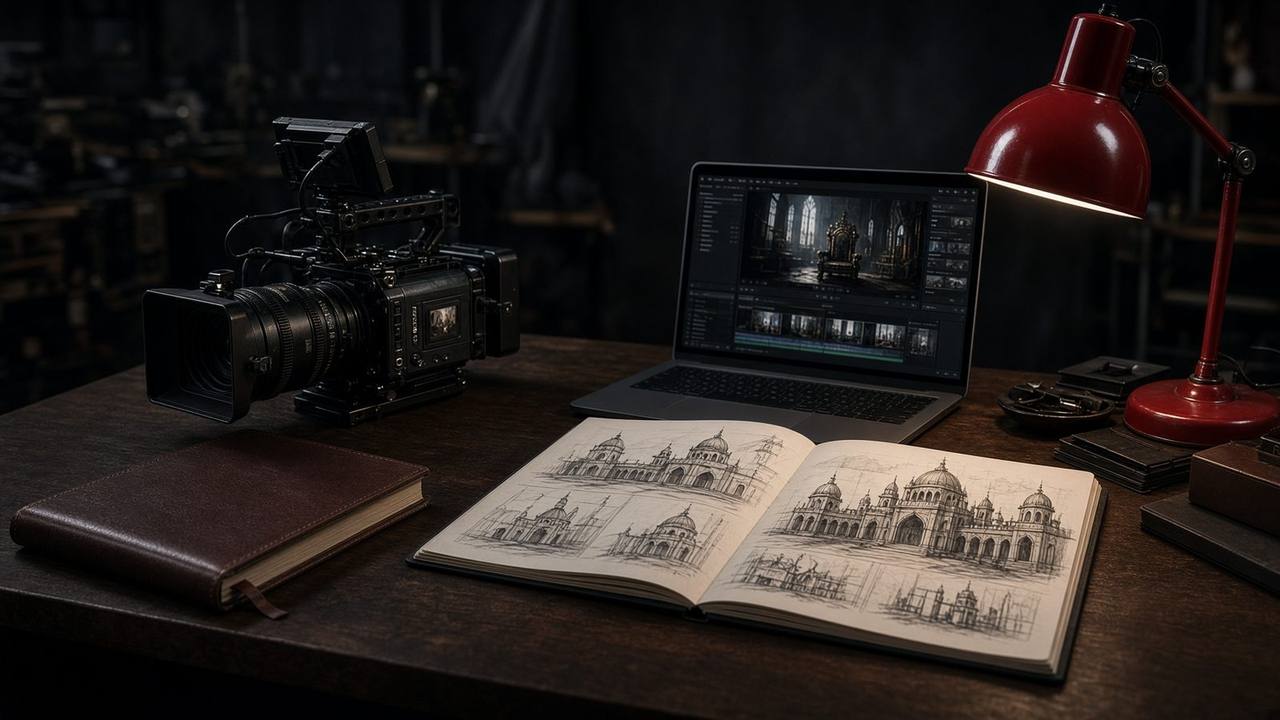
Generation produces possibilities. Direction gives those possibilities purpose. Session one installs the mental shift the rest of the cohort depends on.
Chapter 02 — Cinema in the Age of Artificial Intelligence
Technology creates possibilities. The filmmaker creates meaning.
Learning outcomes
Name the difference between generation and direction in your own work
Rewrite one decorative prompt as a director's question
State what the audience should experience before any tool is opened
From the draft
Chapter 01
The greatest misunderstanding about AI filmmaking is the belief that creation begins when the machine produces an image. It does not. Creation begins earlier. It begins with a decision.
Chapter 01
A prompt writer describes what they want to see. A director understands why the audience should see it. A prompt writer might say: an old man standing beside a river at sunset. A director asks: Who is this man? Why is he beside this river? What happened before he arrived? What does the river represent?
Chapter 02
The question is not: How realistic can this become? The deeper question is: How meaningful can this become? The greatest advantage will not belong to the creator with the most powerful system. It will belong to the creator with the clearest vision.
Chapter 02 · Final principle
The future of cinema will not be defined by what machines can create. It will be defined by what humans choose to create with them.
Classroom plates
Traitor King / DaKreator38 stills
The class is drawn from Julius Nzang’s Volume 1: From Imagination to Cinema. Classroom stills are DaKreator38 production frames. This is not a book for sale on this site.
FIGURE 1.1–1.3
Diagrams
The draft opens with diagrams, not Traitor King frames: the shift from prompting tools to directing meaning (1.1), generation versus direction (1.2), and think in frames (1.3). The stills below are the slate that shift is built to serve.
Classroom case
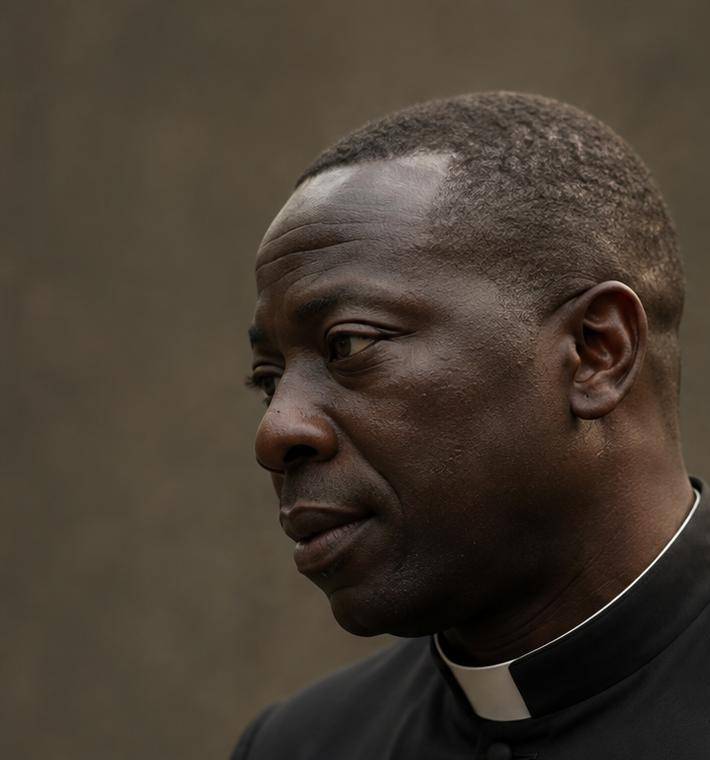
Peter, Rev. Father
Peter — the priest whose name was erased. Session one uses him as proof that the image follows meaning, not the other way around.
Classroom case
Twin Muanenguba Lakes
A world that existed before the camera arrived. The mindset is: why should this exist, then how do we direct it.
The work
Classroom labs
Live lab
Generation versus direction
Write a one-line image request you would have typed last month. Rewrite it as four director questions: What is this about? Who is experiencing it? What should the audience feel? What moment deserves to exist? Do not open a generator. The room hears both versions.
Take-home
The human center
Bring one story you are responsible for telling — two sentences, no software named. If the idea is only interesting after you mention the tool, it is not ready for Session 02.